In a complex business environment, your organization's success is directly tied to the performance and security of its external partners. From cloud service providers and software-as-a-service (SaaS) platforms to IT asset disposition (ITAD) specialists, your vendors are an extension of your operations. Ineffective management of these relationships introduces significant risks, including data breaches, compliance failures, operational disruptions, and financial losses. A structured approach to IT vendor management is no longer optional; it is a core business function essential for maintaining security, ensuring reliability, and maximizing the value of your investments.
This guide provides a direct, actionable framework of IT vendor management best practices. We will move beyond generic advice to offer specific, implementation-focused strategies that you can apply immediately. You will learn how to build a robust program that covers every stage of the vendor lifecycle, from initial selection and contract negotiation to ongoing performance monitoring and secure offboarding.
The practices detailed here are designed for organizations where data security and regulatory compliance are critical. We will cover how to:
- Establish a formal vendor evaluation and selection process.
- Define strict security, data destruction, and compliance requirements in your contracts.
- Monitor vendor performance against concrete Service Level Agreements (SLAs).
- Manage risk through systematic due diligence and ongoing assessments.
- Ensure a secure chain-of-custody for physical assets, a critical component of ITAD.
By implementing these best practices, your IT team can transform vendor management from a reactive, administrative task into a proactive, strategic advantage that protects your organization and drives business value.
1. Establish a Formal Vendor Selection and Evaluation Process
Ad-hoc vendor selection, often driven by immediate needs or personal recommendations, introduces significant organizational risk. A core tenet of effective IT vendor management best practices is replacing this reactive approach with a formal, structured methodology for identifying, assessing, and choosing partners. This disciplined process ensures every vendor meets predefined standards before they are granted access to your systems, data, or facilities. It shifts the dynamic from a simple transaction to a strategic partnership founded on clear, documented expectations.

This method involves creating a consistent framework to evaluate vendors against critical business requirements. It moves beyond just price and features to include a deep dive into security posture, compliance adherence, financial stability, and operational capabilities. Documenting this process is not just good practice; it’s a requirement for audits and demonstrates due diligence in protecting sensitive information.
How to Implement a Formal Evaluation Process
- Create a Vendor Scorecard: Develop a template that lists your key criteria. Assign a weight to each category based on its importance to your organization. For instance, a healthcare provider would assign a higher weight to HIPAA compliance than a marketing firm might.
- Define Non-Negotiable Criteria: Identify your absolute baseline requirements. For any vendor handling data, this should include specific security certifications (e.g., SOC 2 Type II), data destruction standards (e.g., NIST 800-88), and industry-specific compliance.
- Verify Certifications Upfront: Do not rely on a vendor’s claims. Request copies of their audit reports, certifications like ISO 27001 or R2v3, and insurance certificates during the initial request for proposal (RFP) phase.
- Conduct On-Site Assessments: For high-risk services like IT asset disposition (ITAD) or data center colocation, a physical tour of the vendor’s facility is essential. This allows you to verify their security controls, chain-of-custody procedures, and environmental practices firsthand. Understanding your partner's commitment to sustainability is crucial, and you can learn more about selecting an ESG-focused recycling partner to strengthen your own corporate responsibility goals.
2. Develop Comprehensive Service Level Agreements (SLAs)
While a formal selection process establishes a strong foundation, the Service Level Agreement (SLA) is the legally binding framework that governs the ongoing relationship. An SLA moves beyond a simple contract by meticulously defining expected service delivery standards, performance metrics, and remedies for non-compliance. This document is a cornerstone of effective IT vendor management best practices because it creates accountability and provides clear recourse when a partner fails to meet their commitments. It transforms expectations into enforceable obligations.
These agreements codify every critical aspect of the service, from uptime guarantees to data destruction turnaround times. For any organization with security and compliance needs, a generic, vendor-provided SLA is insufficient. A proper SLA must be customized to reflect your specific operational risks, industry regulations, and business priorities, ensuring your interests are protected and enabling true performance-based vendor management.
How to Implement Comprehensive SLAs
- Define Specific, Measurable Metrics: Vague promises are worthless. Specify exact performance indicators. For an IT asset disposition (ITAD) vendor, this could include a 48-hour maximum for certificate of destruction delivery or a 5-business-day window for nationwide pickup requests.
- Integrate Security and Chain-of-Custody: Your SLA must contain clauses detailing the vendor’s security responsibilities. This includes required data sanitization methods (e.g., NIST 800-88 Purge), secure transit protocols, and documented chain-of-custody procedures from pickup to final disposition.
- Establish Clear Penalties and Escalation Paths: What happens when a metric is missed? The SLA must define financial credits, service remediation steps, or other penalties. It should also name specific contacts for escalating issues that are not resolved at the operational level.
- Include Audit Rights: A critical clause grants you the right to audit the vendor’s processes, facilities, and records to verify compliance with the SLA. This right to inspect is non-negotiable for high-risk services, providing a mechanism to confirm that security controls are being maintained.
3. Implement Vendor Risk Management and Due Diligence
Onboarding a vendor is not a one-time event; it marks the beginning of an ongoing relationship that requires continuous oversight. A critical element of IT vendor management best practices involves establishing a formal vendor risk management and due diligence program. This proactive approach ensures that the standards you verified during selection are maintained throughout the partnership, protecting your organization from emerging threats related to cybersecurity, compliance, and operational stability.
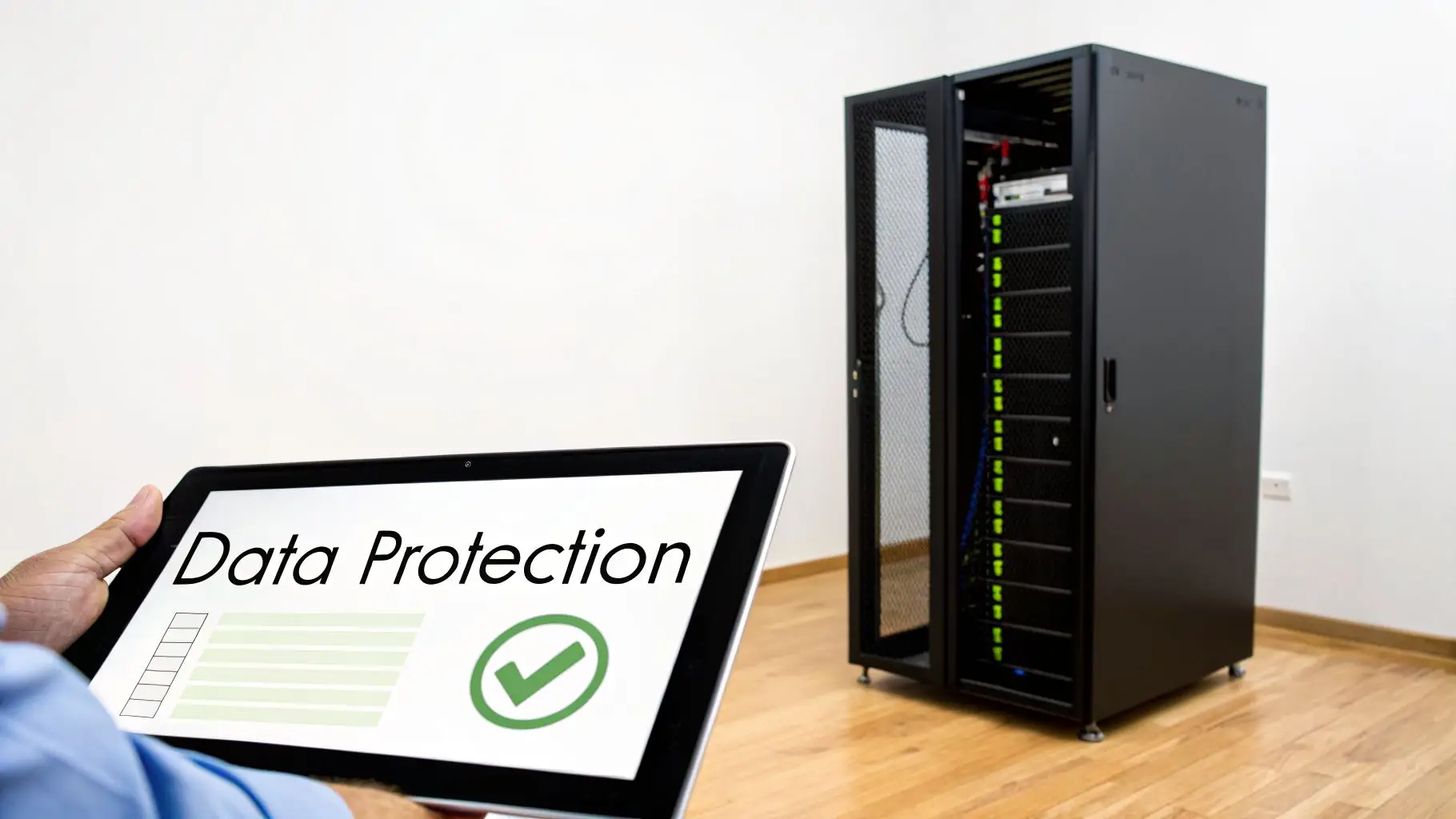
This process involves the continuous assessment of vendor risks, including their financial health, security posture, and adherence to regulations. To effectively mitigate potential threats, your organization needs a robust and proactive data-driven vendor risk management process. For instance, a healthcare provider must annually verify that its ITAD vendor maintains HIPAA compliance, while a financial institution needs to conduct regular security assessments of its data destruction partners to prevent breaches.
How to Implement Ongoing Risk Management
- Establish a Vendor Risk Scoring System: Create a scorecard to rate vendors on key risk indicators (KRIs) like security incidents, compliance lapses, and financial stability. Update these scores at regular intervals (e.g., quarterly or semi-annually) to maintain an accurate risk profile for each partner.
- Schedule Regular Re-Certifications: Do not assume a vendor's certifications are perpetual. Mandate the submission of updated certifications like SOC 2, ISO 27001, or R2 on an annual basis. This is especially important for ITAD vendors, where you can learn more about R2 certification and its value in ensuring responsible recycling.
- Monitor for Regulatory Changes: Keep track of new or updated industry regulations that could impact your vendors' operations and your compliance obligations. Communicate these changes and verify that your partners are adjusting their processes accordingly.
- Set Risk Thresholds and Escalation Triggers: Define clear trigger points for when a vendor's risk score becomes unacceptable. Establish a formal escalation path that outlines the steps to take, from requesting a remediation plan to initiating the process of offboarding the vendor if the risk is not addressed.
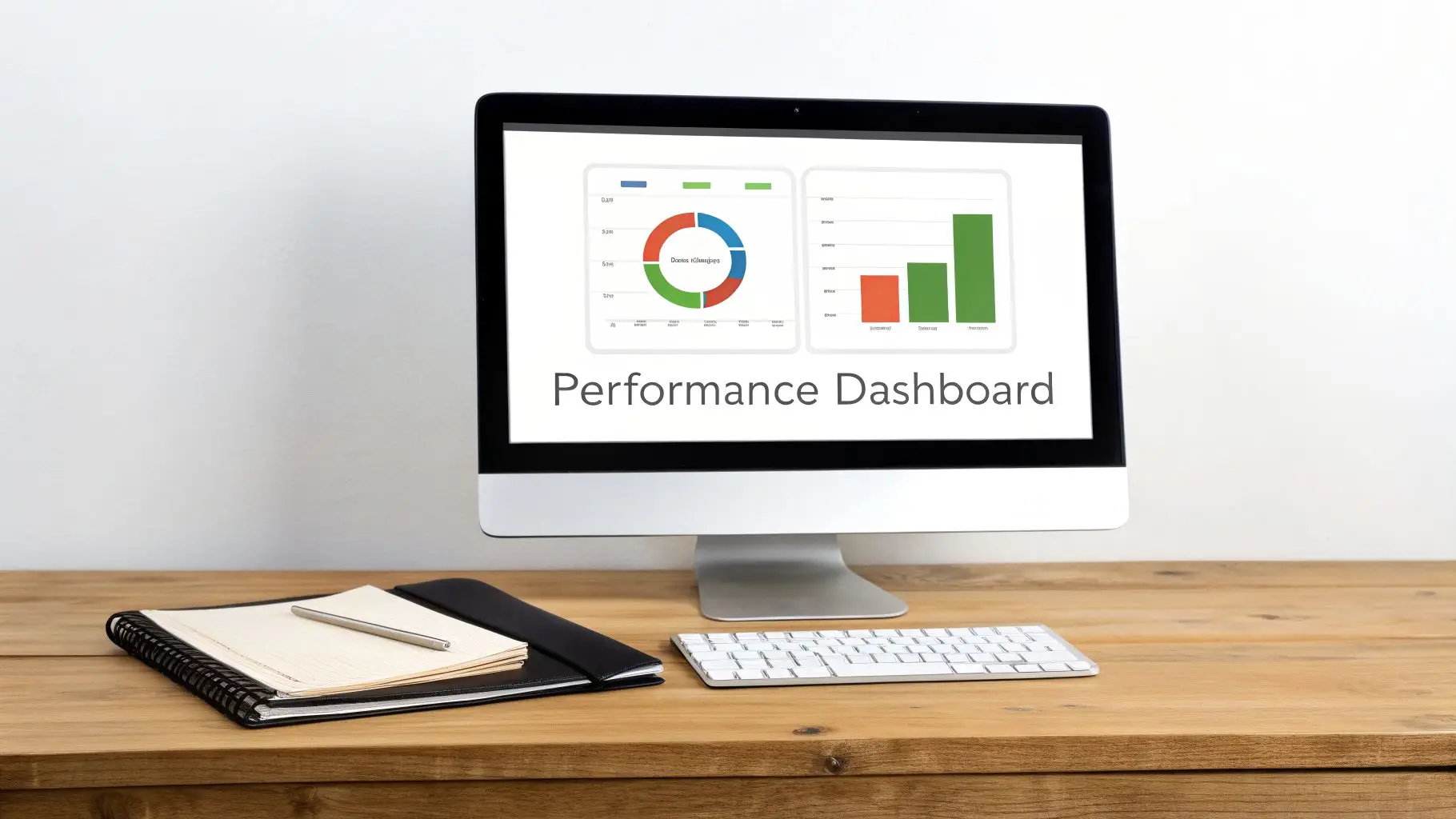
4. Create a Vendor Performance Monitoring and Metrics Dashboard
Signing a contract is the beginning, not the end, of the vendor relationship. One of the most critical IT vendor management best practices is establishing continuous oversight through a performance monitoring dashboard. This centralized system moves vendor management from subjective feelings and occasional check-ins to a data-driven process. It provides an objective, at-a-glance view of how vendors are performing against the key performance indicators (KPIs) and service-level agreements (SLAs) defined in their contracts.
This approach creates a single source of truth for performance, enabling early identification of issues, objective comparisons between vendors, and more productive conversations. Instead of relying on anecdotal evidence, your team can point to specific, quantifiable metrics to hold vendors accountable and collaboratively work toward improvement. For services where timeliness and accuracy are paramount, such as IT asset disposition (ITAD), this level of tracking is non-negotiable for ensuring security and compliance.
How to Implement a Performance Monitoring Dashboard
- Select Critical KPIs: Avoid the temptation to track everything. Choose 5-8 critical metrics that directly reflect business value and risk. For an ITAD vendor, this must include data destruction turnaround times, pickup response times, and the accuracy of asset reporting and certification delivery.
- Establish Performance Baselines: Before monitoring begins, define what "good" looks like. Use the contract's SLAs to set the baseline for acceptable performance. This creates a clear standard against which all future activity is measured.
- Use Visualization Tools: Raw data in spreadsheets can be difficult to interpret. Use dashboard software or even advanced features in Excel to create charts and graphs that make performance trends immediately obvious to all stakeholders.
- Schedule Regular Performance Reviews: Use the dashboard as the foundation for monthly or quarterly business reviews (QBRs) with your vendors. Share the data ahead of time and come prepared to discuss trends, celebrate successes, and create action plans for areas needing improvement. This transparency fosters a partnership focused on mutual success.
5. Establish Clear Data Security and Compliance Requirements
Simply hoping a vendor will protect your data is not a strategy; it's a liability. A foundational element of modern IT vendor management best practices involves defining and enforcing explicit data security and compliance requirements. This means documenting exactly how vendors must handle, store, transmit, and destroy your sensitive information before any engagement begins. These requirements are not suggestions, they are contractual obligations that protect your organization from breaches, ensure regulatory adherence, and appropriately transfer risk.
Establishing clear data security and compliance requirements for IT vendors is paramount, especially for services handling sensitive communications. When adopting advanced solutions, such as those involving voice agents, it's vital to prioritize robust AI Calling Security and Compliance to protect data and maintain trust. From financial institutions needing PCI DSS adherence to healthcare providers requiring HIPAA-compliant data destruction, these rules form the bedrock of a secure partnership.
How to Implement Clear Security Requirements
- Mandate Specific Certifications: Do not leave security standards open to interpretation. Require vendors to maintain relevant certifications such as SOC 2 Type II, ISO 27001, and industry-specific credentials like R2v3 or e-Stewards for ITAD providers. Request and verify these documents annually.
- Define Data Destruction Protocols in Contracts: Specify the exact methods for data destruction. This could include certified data wiping that meets NIST 800-88 standards or physical destruction methods like shredding. Require a Certificate of Data Destruction for every asset. You can discover the specifics of the NIST 800-88 guidelines to better inform your contract clauses.
- Secure Audit and Access Rights: Your contract must grant you the right to audit your vendor’s security controls. This includes reviewing process documentation, interviewing staff, and, for high-risk vendors, conducting on-site inspections of their facilities to verify compliance.
- Include Subcontractor Flow-Down Clauses: Ensure your primary vendor is contractually obligated to enforce the same security standards on any subcontractors they use. This prevents security gaps in the supply chain and holds your vendor accountable for their entire service delivery.
6. Implement a Vendor Contract Management System and Governance
Managing vendor relationships without a centralized system for contracts is like navigating a complex IT environment without a network map. Scattered agreements, forgotten renewal dates, and inconsistent terms create significant operational friction and legal risk. A cornerstone of mature IT vendor management best practices is establishing a formal system for contract management and governance. This brings all vendor agreements into a single, controlled environment, ensuring visibility and consistency across the organization.
A dedicated system provides the framework for tracking every contract's lifecycle, from initial drafting to renewal or termination. It acts as the single source of truth for all contractual obligations, service level agreements (SLAs), pricing terms, and compliance requirements. This structured approach prevents service interruptions from lapsed agreements, avoids auto-renewals for underperforming vendors, and ensures the consistent application of your company’s legal and security standards.
How to Implement a Contract Management System
- Centralize All Agreements: Use a contract management software or a secure, shared repository to store every vendor contract. This eliminates departmental silos and provides a complete view of your vendor ecosystem.
- Automate Key Date Reminders: Set up automated alerts for critical dates, such as 90-day renewal notices, certification expiration dates, and scheduled performance reviews. This gives your team ample time to evaluate performance and renegotiate terms without pressure.
- Develop Standardized Templates: Work with your legal department to create a library of pre-approved contract templates. Include standard clauses for data protection, security requirements, and liability to ensure a consistent baseline of protection in all new agreements.
- Mandate Explicit ITAD and Data Destruction Terms: For ITAD vendors, the contract must explicitly detail data destruction methods, chain-of-custody protocols, and reporting requirements. This includes specifying the format and delivery of destruction certificates. Understanding the details of this documentation is critical, and you can master the destruction certificate format to strengthen your compliance posture.
- Track Amendments and Versions: Implement version control to maintain a clear audit trail of all contract modifications. This history is invaluable during disputes or performance reviews, as it shows how the relationship and responsibilities have evolved.
7. Establish Vendor Diversity and Redundancy Strategies
Relying on a single vendor for a critical service creates a significant point of failure that can disrupt operations, compromise security, and eliminate negotiation leverage. A key component of robust IT vendor management best practices is building intentional diversity and redundancy into your vendor portfolio. This approach moves beyond simply having a backup; it involves strategically engaging multiple qualified partners to mitigate supply chain risks, ensure business continuity, and foster a competitive environment that drives service quality and cost-effectiveness.
This proactive strategy ensures that if a primary vendor fails, experiences a service outage, or suffers a security breach, you have a qualified and contracted alternative ready to step in immediately. It is a core principle of modern supply chain risk management and business continuity planning, transforming vendor relationships from a dependency into a strategic advantage. It prevents vendor lock-in and gives you the flexibility to adapt to changing business needs and market conditions without starting a new procurement cycle from scratch.
How to Implement a Diversity and Redundancy Strategy
- Identify and Qualify Backup Vendors: For every critical service, from data destruction to cloud infrastructure, identify and fully vet at least one or two alternative vendors. Do not wait for an emergency. This includes verifying they meet the same non-negotiable criteria as your primary partner, such as security certifications and compliance standards.
- Structure Primary and Secondary Agreements: Engage multiple vendors with clearly defined roles. For IT asset disposition (ITAD), you might use a national vendor for large-scale projects and a regional vendor for faster response times in specific geographic areas. This ensures you have both capacity and agility.
- Conduct Periodic Competitive RFPs: Even if you are satisfied with your incumbent vendor, issuing a request for proposal (RFP) every two to three years keeps them competitive. It also provides a regular opportunity to re-evaluate the market and confirm your backup vendors remain viable and aligned with your standards.
- Test Your Failover Process: A backup plan is only useful if it works. Annually conduct a small-scale test with your secondary vendors to validate their processes, from initial request to final reporting. This ensures they can seamlessly take over during a real disruption and confirms their capabilities have not degraded.
8. Create a Vendor Onboarding and Knowledge Transfer Process
Signing a contract is just the beginning of a vendor relationship, not the end of the selection process. One of the most critical, yet often overlooked, IT vendor management best practices is establishing a structured onboarding and knowledge transfer procedure. Without a formal process, new vendors can cause service disruptions, security gaps, and operational friction as they struggle to align with your organization's specific requirements. A methodical onboarding ensures that from day one, your new partner understands your operational workflows, security protocols, and compliance obligations.
This disciplined approach minimizes the ramp-up period and verifies the vendor's comprehension and capability before they are fully integrated. It's about proactively setting the stage for a successful long-term partnership rather than reactively fixing problems that arise from a lack of initial alignment. For vendors handling sensitive tasks like IT asset disposition (ITAD) or data center equipment moves, this step is non-negotiable for mitigating risk and ensuring accountability.
How to Implement a Vendor Onboarding Process
- Develop an Onboarding Checklist: Create a standardized checklist with key milestones for every new vendor. This should include orientation sessions, training modules, system access provisioning, and formal sign-offs at each stage to confirm completion and understanding.
- Mandate Security and Compliance Training: Make your organization's security and compliance training a required component of onboarding. This ensures vendors are aware of their responsibilities regarding data handling, privacy laws (like HIPAA or GDPR), and your specific security policies before they access any systems or information.
- Schedule Process Walkthroughs: For critical service providers, such as an ITAD partner, a physical tour of their facility or a detailed virtual walkthrough of their processes is vital. This allows you to witness their chain-of-custody procedures, data destruction methods, and security controls in action.
- Establish a Pilot Period: Before a full-scale deployment, implement a trial or pilot phase. This controlled test validates the vendor’s performance against the agreed-upon service levels and provides an opportunity to identify and resolve issues in a low-risk environment. During this period, you can establish baseline performance metrics for future monitoring.
- Document and Verify Understanding: Document all key processes and require the vendor to formally acknowledge their understanding. For IT equipment buyback vendors, this includes aligning on asset assessment criteria and pricing methodology to prevent future disputes.
9. Monitor and Manage Vendor Costs and Financial Health
Signing a contract is the beginning, not the end, of financial oversight. Effective IT vendor management best practices demand continuous monitoring of both vendor costs and their overall financial stability. This dual focus ensures you receive the agreed-upon value, prevents unexpected price hikes, and protects your organization from service disruptions caused by a vendor's financial distress. It’s a proactive strategy to optimize spending while mitigating supply chain risk.
This practice goes beyond simply paying invoices. It involves a detailed analysis of spending trends, benchmarking prices against the market, and assessing the financial health of critical partners. For services with variable costs, like IT asset disposition (ITAD), this scrutiny is essential. Tracking buyback values for retired equipment or transportation fees ensures you are not overpaying and are maximizing value recovery. A vendor’s financial failure can halt your operations, making their stability your business continuity concern.
How to Implement Vendor Cost and Financial Monitoring
- Establish Detailed Cost Tracking: Implement a system to track all vendor-related expenses by service type. For a nationwide ITAD partner, this would mean separately tracking data destruction fees, logistics charges, recycling costs, and revenue from asset remarketing.
- Benchmark Pricing Annually: Regularly compare your vendor's pricing against market rates. For ITAD, this involves evaluating their equipment buyback offers and data destruction fees against industry benchmarks to confirm you are receiving competitive terms.
- Audit Invoices Meticulously: Before payment, verify every line item on an invoice against your contract's agreed-upon pricing structure. This prevents billing errors and unauthorized charges from eroding your budget.
- Conduct Financial Health Assessments: For critical vendors, request and review financial statements or third-party financial risk reports annually. This provides an early warning system for a partner's potential financial instability that could impact their service delivery.
- Calculate Total Cost of Ownership (TCO): Look beyond the price tag to understand the complete cost of a partnership, including "hidden" expenses like employee training, travel, or integration support. Analyzing factors that influence the cost of hard drive shredding, for example, reveals how logistics and volume directly impact the TCO of data security.
10. Establish Compliance Verification and Audit Procedures
Signing a contract is just the starting point of a vendor relationship; ongoing compliance is not guaranteed. A core component of mature IT vendor management best practices is the establishment of systematic procedures to verify that your partners continuously adhere to agreed-upon standards. This prevents "compliance drift," where a vendor's initial high standards degrade over time, exposing your organization to regulatory penalties, data breaches, and reputational harm. Formal audits provide documented proof of due diligence and identify security gaps before an incident occurs.
This proactive approach moves beyond simply trusting a vendor's claims and implements a "trust but verify" model. It involves a scheduled, documented review of certifications, security controls, and regulatory adherence. For high-risk activities like IT asset disposition (ITAD) or cloud data storage, this verification process is a non-negotiable part of your risk management strategy, ensuring sensitive data is handled correctly throughout its entire lifecycle.
How to Implement Compliance Verification and Audits
- Schedule Annual Reviews: Create a calendar to conduct formal compliance verification reviews with every vendor annually. For critical vendors, consider semi-annual or quarterly check-ins.
- Request and Scrutinize Audit Reports: Do not just check a box. Actively request and review third-party audit reports like SOC 2 Type II, ISO 27001, and others. Look for exceptions, management responses, and remediation plans noted in the reports.
- Verify Industry-Specific Certifications: For ITAD vendors, annually confirm their R2v3 or e-Stewards certifications are active and in good standing. For vendors handling financial data, verify PCI DSS compliance. This step is essential for meeting regulatory demands like the FTC Disposal Rule.
- Conduct On-Site Assessments: For high-risk vendors, a physical audit of their facility every 1-2 years is crucial. This is your chance to witness their security protocols, chain-of-custody procedures, and environmental controls firsthand, ensuring their practices match their promises.
- Document Everything: Maintain a detailed record of all compliance verification activities, including reviewed documents, audit findings, and communication with the vendor. This documentation is your evidence in the event of a regulatory audit.
IT Vendor Management: 10 Best Practices Comparison
| Practice | Implementation Complexity 🔄 | Resource Requirements ⚡ | Expected Outcomes 📊⭐ | Ideal Use Cases 💡 | Key Advantages ⭐ |
|---|---|---|---|---|---|
| Establish a Formal Vendor Selection and Evaluation Process | High 🔄🔄🔄 | High ⚡⚡⚡ | Reduced vendor risk, better fit, audit-ready evidence 📊 — ⭐⭐⭐⭐ | New vendor engagements, regulated or critical services | Standardized decisions, clear expectations, compliance documentation ⭐⭐⭐⭐ |
| Develop Comprehensive Service Level Agreements (SLAs) | Medium 🔄🔄 | Medium ⚡⚡ | Clear performance standards, recourse for failures 📊 — ⭐⭐⭐ | Uptime-critical services, data destruction, ongoing support contracts | Accountability via KPIs and penalties, objective monitoring ⭐⭐⭐ |
| Implement Vendor Risk Management and Due Diligence | High 🔄🔄🔄 | High ⚡⚡⚡ | Early risk detection, continuity protection, reputational safety 📊 — ⭐⭐⭐⭐ | Long-term vendors, data/financially sensitive relationships | Proactive mitigation, regulator-ready records, early intervention ⭐⭐⭐⭐ |
| Create a Vendor Performance Monitoring and Metrics Dashboard | Medium 🔄🔄 | Medium ⚡⚡ | Data-driven performance insights, early issue alerts 📊 — ⭐⭐⭐⭐ | Multi-vendor environments, SLA enforcement, continuous improvement | Objective reviews, trend analysis, supports vendor improvement ⭐⭐⭐⭐ |
| Establish Clear Data Security and Compliance Requirements | High 🔄🔄🔄 | Medium-High ⚡⚡⚡ | Fewer breaches, regulatory compliance, defensible posture 📊 — ⭐⭐⭐⭐ | Any data-sensitive vendors (HIPAA/PCI/GDPR) | Strong controls, liability transfer, customer trust ⭐⭐⭐⭐ |
| Implement a Vendor Contract Management System and Governance | Medium 🔄🔄 | Medium ⚡⚡ | Reduced lapsed contracts, consistent enforcement 📊 — ⭐⭐⭐ | Organizations with many vendor contracts or frequent renewals | Central visibility, automated renewals, audit trail ⭐⭐⭐ |
| Establish Vendor Diversity and Redundancy Strategies | Medium 🔄🔄 | Medium ⚡⚡ | Improved continuity and pricing leverage 📊 — ⭐⭐⭐ | Critical services where single-vendor risk is unacceptable | Continuity, negotiation leverage, scalable capacity ⭐⭐⭐ |
| Create a Vendor Onboarding and Knowledge Transfer Process | Medium 🔄🔄 | Medium ⚡⚡ | Faster ramp-up, fewer initial errors, smoother transition 📊 — ⭐⭐⭐ | New vendors, complex integrations, ITAD onboarding | Reduced disruption, clear roles, baseline performance ⭐⭐⭐ |
| Monitor and Manage Vendor Costs and Financial Health | Medium 🔄🔄 | Medium ⚡⚡ | Cost optimization, early financial distress detection 📊 — ⭐⭐⭐ | High-spend vendors, long-term supply relationships | TCO visibility, savings opportunities, negotiation support ⭐⭐⭐ |
| Establish Compliance Verification and Audit Procedures | High 🔄🔄🔄 | High ⚡⚡⚡ | Sustained compliance, audit evidence, corrective action tracking 📊 — ⭐⭐⭐⭐ | Regulated industries, critical data-handling vendors | Prevent fines, demonstrate due diligence, continuous assurance ⭐⭐⭐⭐ |
Final Thoughts
Transitioning from a reactive to a proactive vendor management strategy is not just an operational upgrade; it is a fundamental business necessity. The best practices we've detailed throughout this guide, from establishing a formal selection process to implementing rigorous compliance audits, are the building blocks of a resilient and secure IT ecosystem. Moving beyond simple procurement, this mature approach to IT vendor management best practices transforms vendor relationships from transactional exchanges into strategic partnerships that drive value and mitigate risk.
At its core, effective vendor management is about control, visibility, and accountability. You are entrusting third parties with critical aspects of your operations, data, and reputation. Without a structured framework, you are essentially operating on faith, an untenable position for any organization with significant compliance or data security obligations. Each practice, whether it's developing granular Service Level Agreements (SLAs) or creating a performance monitoring dashboard, serves to replace that faith with verifiable data and clear expectations.
Key Takeaways for Immediate Action
To put these concepts into practice, focus on these critical starting points:
- Audit Your Current State: Begin by evaluating your existing vendor relationships against the best practices outlined. Where are the gaps? Do you have formal SLAs for all critical vendors? Is your risk assessment process documented and repeatable? This initial audit will provide a clear roadmap for improvement.
- Prioritize by Risk: You cannot overhaul everything at once. Categorize your vendors based on the level of risk they represent and the criticality of the service they provide. Focus your initial efforts on high-risk, high-impact vendors, particularly those with access to sensitive data or critical infrastructure.
- Centralize and Document: One of the most common failings is a decentralized, ad-hoc approach. Establish a central repository for all vendor contracts, performance data, and risk assessments. This "single source of truth" is foundational for effective governance and decision-making. A dedicated Vendor Management System (VMS) or even a well-organized shared database can achieve this.
The Strategic Value of Mastering Vendor Management
Mastering these IT vendor management best practices yields benefits far beyond simple cost savings or compliance checkboxes. It builds a more agile and secure operational foundation. When you have deep visibility into vendor performance and risk, you can make faster, more informed decisions. When a vendor consistently underperforms or a new risk emerges, your documented processes for performance review and contract management allow you to act decisively rather than reactively.
Furthermore, this strategic approach fosters a culture of accountability, both internally and with your external partners. It sets a standard that communicates your organization's commitment to security, quality, and operational excellence. This, in turn, attracts higher-caliber vendors who are prepared to meet those standards, creating a virtuous cycle of improvement. Ultimately, a strong vendor management program is a competitive differentiator, enabling you to protect your assets, satisfy regulators, and deliver reliable services to your own customers with confidence. The journey to a mature program requires commitment, but the return on that investment-in security, stability, and strategic advantage-is immeasurable.
As you implement these practices, remember that the vendor lifecycle extends to the very end of your IT assets' usefulness. For secure, compliant, and sustainable IT asset disposition (ITAD), partnering with a certified specialist is a critical component of your overall vendor management strategy. Beyond Surplus provides certified electronics recycling and secure data destruction services, ensuring your end-of-life equipment is handled with the same rigor you apply to all other aspects of your IT operations. Contact Beyond Surplus to fortify the final, crucial link in your vendor management chain.